
Scaling Future with Innovation
4. We Built More Roads. We Got More Traffic.
Yvonne Winter · CEO, FlyNow
Download PDF
01Is congestion a problem of our modern times?
Are we the first generation to suffer from traffic?
Let’s take a short journey through mobility history.
In the 1st century AD, around one million people are estimated to have lived in Rome.
Supplying and servicing a city of that size required thousands of horse-drawn carts and wagons. The Romans understood something we still understand today: cities need infrastructure.
They invested heavily in roads.
By around 100 AD, the Roman road network had reached approximately 70,000 kilometers.
For comparison, Germany's motorway network today spans around 13,000 kilometers.
“All roads lead to Rome.”
And in Rome, they led to something else, too:
Congestion.
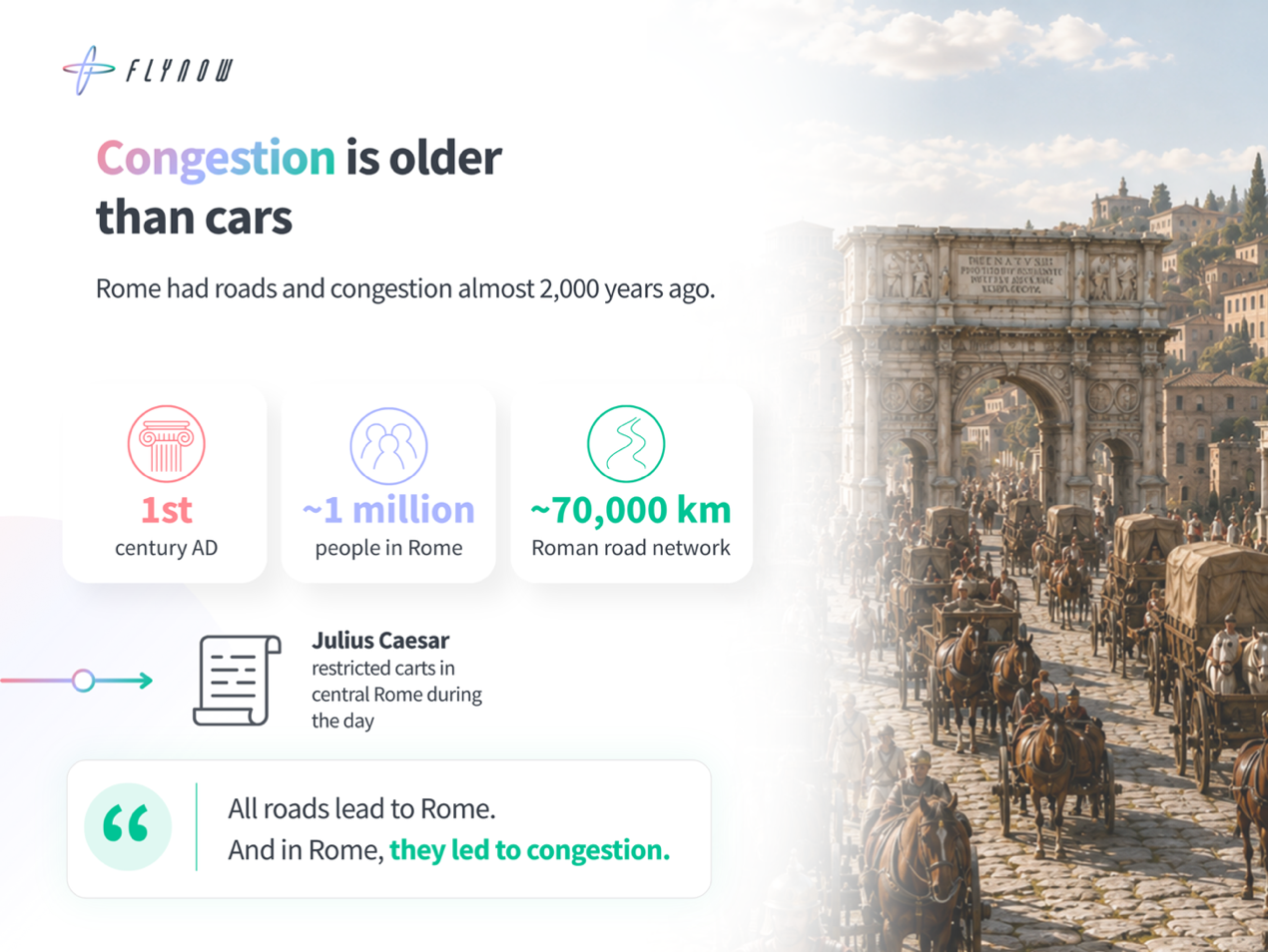
The streets became increasingly crowded, creating risks for both pedestrians and carriages. Julius Caesar responded with one of the earliest traffic regulations in history: carts and wagons were restricted from entering central Rome during the day.
Transport was pushed into the night.
Sound familiar?
The problem didn't disappear.
02Every generation finds a new solution
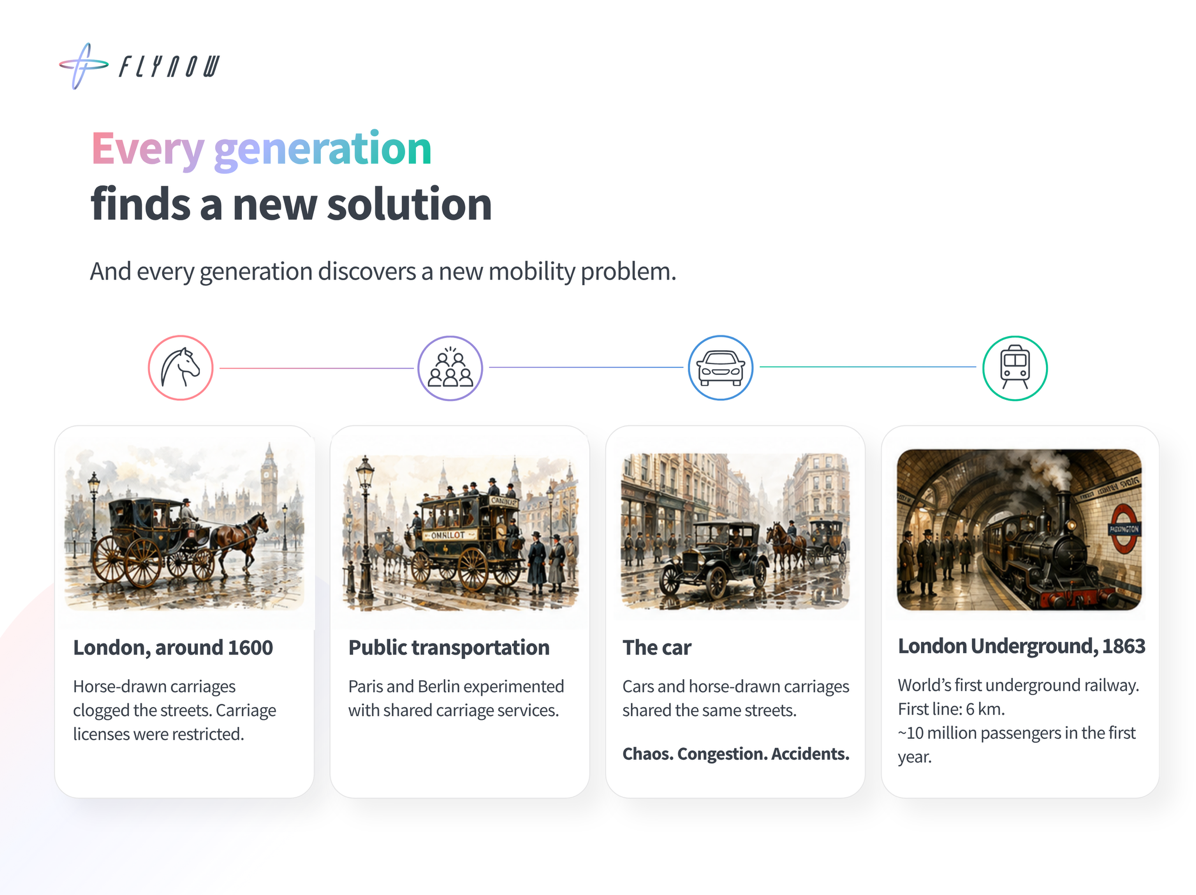
Around 1600, horse-drawn carriages were clogging the streets of London. King Charles II responded by restricting carriage licenses. Other rulers, including Oliver Cromwell, followed similar approaches.
Then cities started looking for another solution:
Public transportation.
From the 17th century onward, cities such as Paris and Berlin experimented with public carriage services. In the 18th and 19th centuries, affordable private services emerged — eventually giving birth to the first taxis.
And then came another revolution. The car.
At the beginning of the 20th century, cars and horse-drawn carriages suddenly had to share the same streets.
The result?
Chaos. Congestion. Accidents.
So cities built something new.
In 1863, London opened the world's first underground railway.
The first line was only six kilometers long — yet almost 10 million passengers used it during its first year.
03So, are more roads the answer?
We have certainly tried.
The logic seems simple:
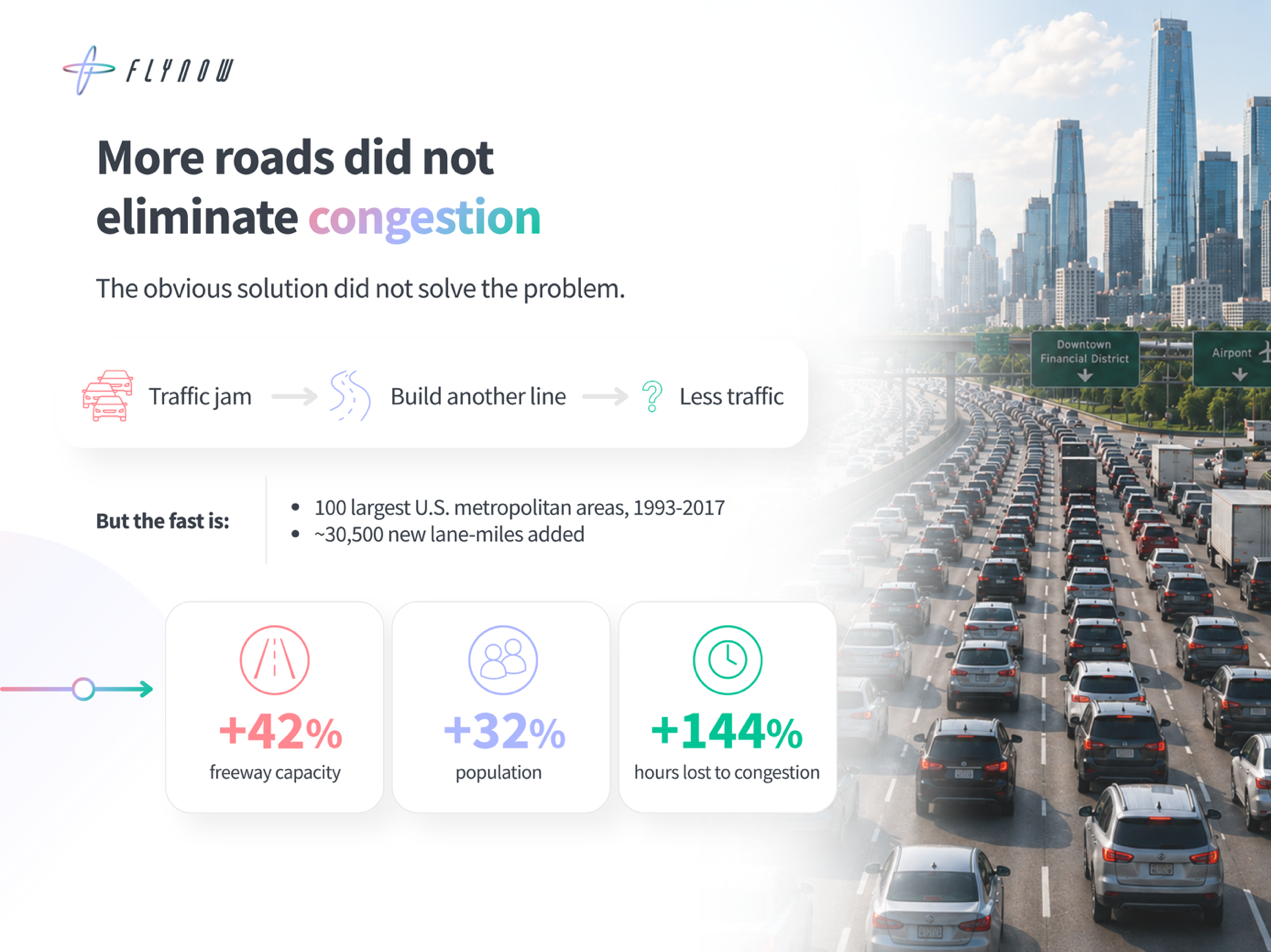
Traffic jam → build another lane → less traffic.
Except it doesn't necessarily work that way.
According to research by Transportation for America, freeway capacity in the 100 largest U.S. metropolitan areas increased by 42% between 1993 and 2017.
Around 30,500 new lane-miles were added — roughly 49,000 kilometers of additional road capacity.
Population increased by around 32%.
Yet the number of hours lost to congestion increased by a staggering 144%.
More roads did not eliminate congestion. In many cases, they simply created more capacity for more cars.
04And now we are approaching the next challenge.
Today, there are 33 megacities with more than 10 million inhabitants. By 2050, that number is expected to rise to 37.
And according to the UN, around 23.3% of the world's population is expected to live in cities with more than one million inhabitants by 2050.
With a projected global population of around 9.7 billion, that's approximately 2.26 billion people living in large cities.
And simply building more roads is unlikely to be enough.
05But there is another dimension we often overlook.
Noise and emissions.
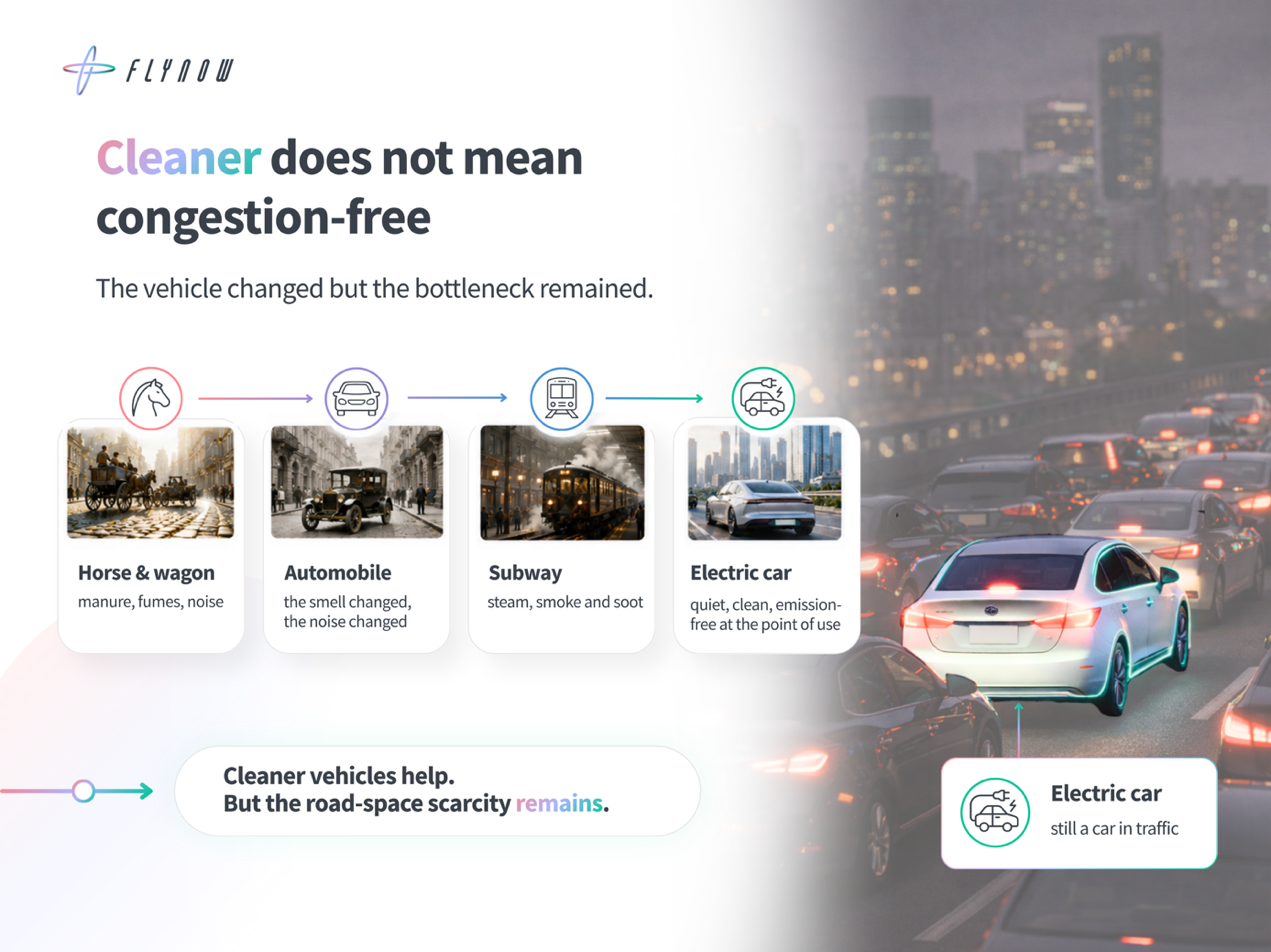
Imagine the streets of historic Rome. Horse manure. Horse fumes. Pathogens.Iron-rimmed wheels and horseshoes hammering against cobblestones.
Then came the automobile. The smell changed. The noise changed. But the fundamental problem remained.
Then came the subway. A revolutionary idea — but the first underground trains were pulled by steam locomotives, creating enormous amounts of noise, smoke and soot.
And eventually: The electric car.
Quiet. Clean. Emission-free at the point of use. WHAT A RELIEF!
But there is one small problem.
You can still be stuck in traffic.
05Add a new dimension to mobility
So what if we stopped asking:
“How can we move more cars through the city?”
And started asking: “How can we move people without needing more road space?”
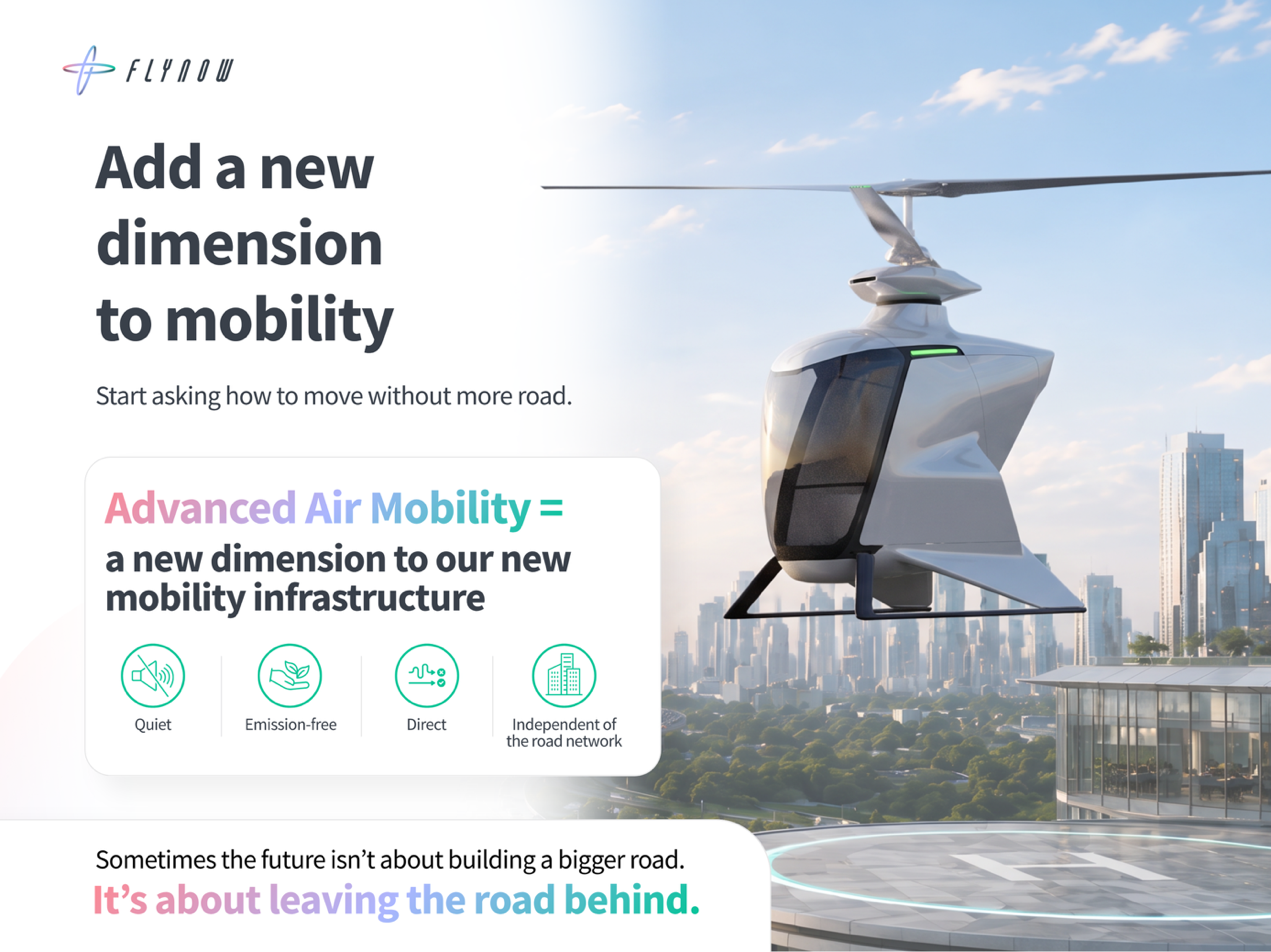
What if mobility could move into the third dimension?
What if the journey above the traffic could be:
Quiet. Emission-free. Direct. Independent of the road network.
That is why I believe Advanced Air Mobility is not simply about creating another means of transportation. It is about adding a new dimension to our mobility infrastructure.
We don't necessarily need to replace the car. We need to stop expecting the road to solve every mobility problem.
And honestly? I am in love with our eCopter ❤️
Because sometimes the future isn't about building a bigger road.
It's about leaving the road behind.